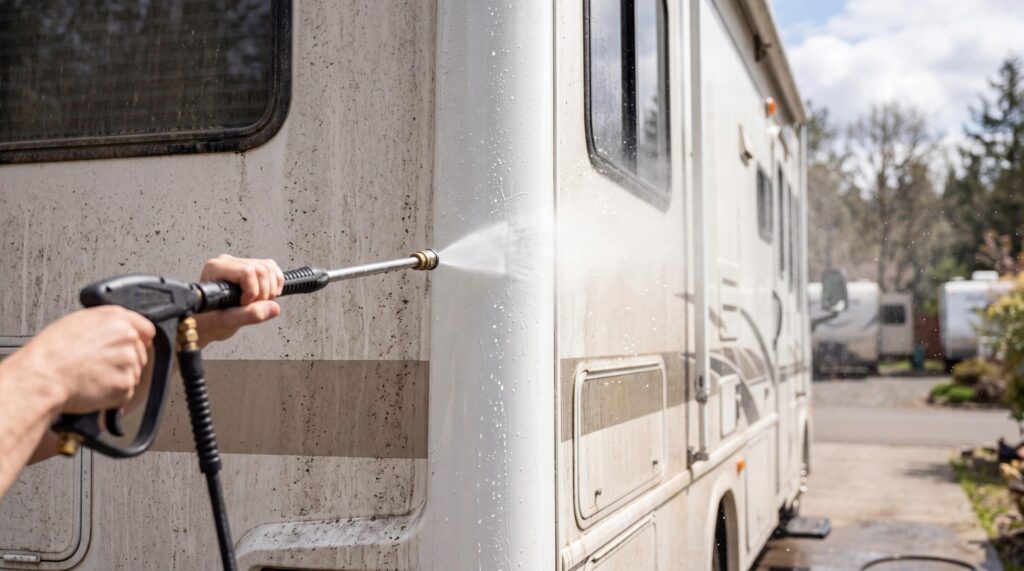
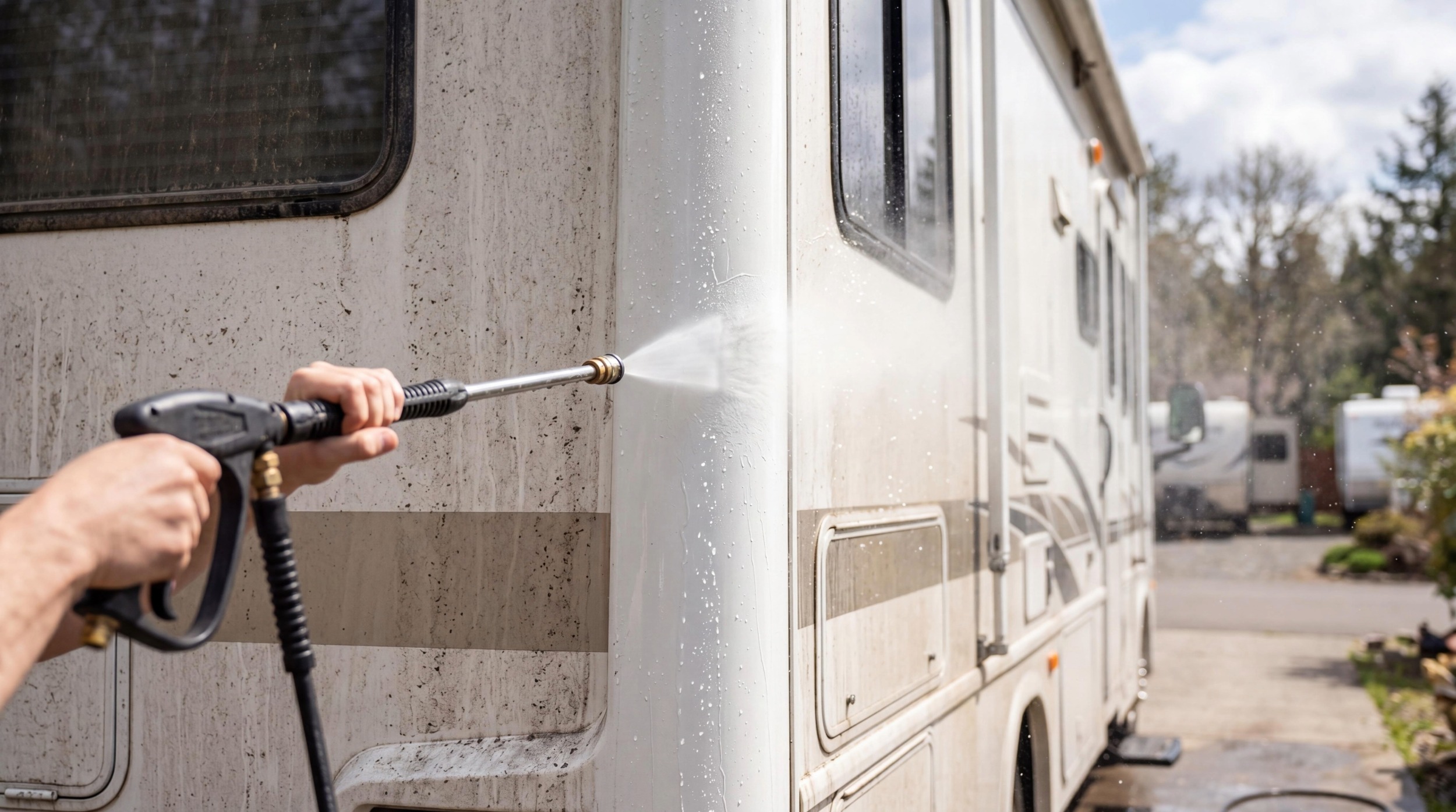
To store an RV for winter, clean and empty the inside, protect the plumbing from freezing, care for the batteries and tires, and keep out moisture and pests. This RV winter storage checklist walks you through each step in order, so your rig is ready to roll when spring comes back around. And since parking the RV doesn’t have to mean the end of your travel season, we’ll also share how a cozy cabin or cottage stay can keep your winter weekends full.
Step 1: Clean and Empty the Inside
Leftover food and moisture cause most of the unwelcome springtime surprises, like mold, odors, and mice. A little time here saves a lot of scrubbing later:
- Remove all food, including canned goods and drinks that can freeze and burst
- Empty, clean, and dry the refrigerator, then prop the door open to prevent mold
- Take home bedding, towels, and anything else that holds moisture
- Vacuum and wipe down surfaces so crumbs don’t attract pests
Step 2: Winterize the Plumbing
“Winterizing” simply means protecting your water system from freezing. Water expands when it freezes, which can crack pipes, fittings, and tanks. It sounds technical, but the basic process is very doable:
- Drain the fresh water tank, the water heater (once it’s cool and depressurized), and the low-point drains
- Empty and flush the black and gray holding tanks
- Bypass the water heater, then either blow out the lines with compressed air or pump RV antifreeze through them until it runs pink at every faucet
- Pour a small amount of RV antifreeze into each drain trap
Use only antifreeze labeled for RV or drinking water systems, never automotive antifreeze. Steps vary a bit from model to model, so keep your owner’s manual close by.
For a detailed walkthrough with photos, see Winnebago’s RV winterizing guide.
Step 3: Batteries, Propane, and Tires
- Batteries: Charge them fully, then disconnect them. Small devices like propane detectors draw power even when everything looks off, which can drain a battery over a few weeks. If you remove the batteries, store them somewhere cool and dry and top them off with a battery maintainer.
- Propane: Turn off the valve at the tank.
- Tires: Inflate to the recommended pressure, chock the wheels, and use tire covers to block sun damage. If you can, park on pavement or boards rather than bare dirt.
Step 4: Keep Out Moisture and Pests
- Place moisture absorbers or a small dehumidifier inside
- Inspect the roof and seams, and reseal any cracks
- Seal gaps around plumbing and wiring openings where mice can get in
- Close the blinds to limit sun fading
- Use a breathable RV cover rather than a plastic tarp, which can trap moisture
If you can, stop by and check on your RV about once a month. Storage season is also a great time to work through our list of off-season RV maintenance projects.
Your RV Is Stored. Your Winter Getaways Don’t Have to Be.
A winter cabin getaway gives you the same campground setting you love, minus the RV setup. There’s no hooking up, no leveling, and no worrying about frozen water lines. Just unpack, put the kettle on, and settle in.
Streamside Parks offers cabins and cottages at properties that stay open all winter, including Twin Grove in Pennsylvania and Indian Waters in California. At Twin Grove, fully furnished cottages with kitchens and porches sit in the rolling hills of Central Pennsylvania. At Indian Waters, comfortable cottages with full kitchens and outdoor patios come with sunny Coachella Valley days, heated pools, and spas. Either one is a lovely fit for a long weekend, a holiday trip, or bringing along friends who don’t own an RV.
Browse winter things to do near Twin Grove or see what’s waiting around Indian Waters to start planning your getaway.
For a cozy cabin weekend, pack:
- Warm layers, boots, and a hat for outdoor time
- Groceries for easy meals and hot drinks
- Games, books, or a movie list for cozy evenings
Would you rather keep RVing all winter? Take a look at our guide to choosing a winter RV park.
RV Winter Storage FAQ
When should I winterize my RV?
Before the first overnight freeze where your RV is stored. Water starts freezing at 32°F, so it’s better to be a little early than to wait for a hard cold snap.
Can I use regular antifreeze in my RV?
No. Automotive antifreeze is toxic. Use only pink RV antifreeze made for drinking water systems.
Should I leave my RV battery connected over winter?
No. Disconnect it after a full charge, because small devices can slowly drain it, and a drained lead-acid battery can freeze.
Book a Cozy Winter Weekend
RV tucked in for the season? Keep the adventures going with a warm, comfortable cabin or cottage stay. Browse cabins and cottages for winter dates and pick your weekend. We can’t wait to welcome you.